Indirect Power
The Psychology of Everyday Social Control
Indirect power refers to the ways social influence, dominance, and control operate without open declaration, moving through tone, timing, norms, symbols, and emotional signaling rather than overt authority or force. This series examines the everyday psychological mechanisms through which such power functions, isolating forms such as mockery, interruption, politeness, surveillance, and violence in order to render their structure visible without moral dramatization or prescriptive intent. Taken together, the essays form a coherent architecture of indirect social control, mapping how power moves in ordinary life from subtle interpersonal regulation to the boundary conditions enforced by force.
The Psychological Architecture of Indirect Power
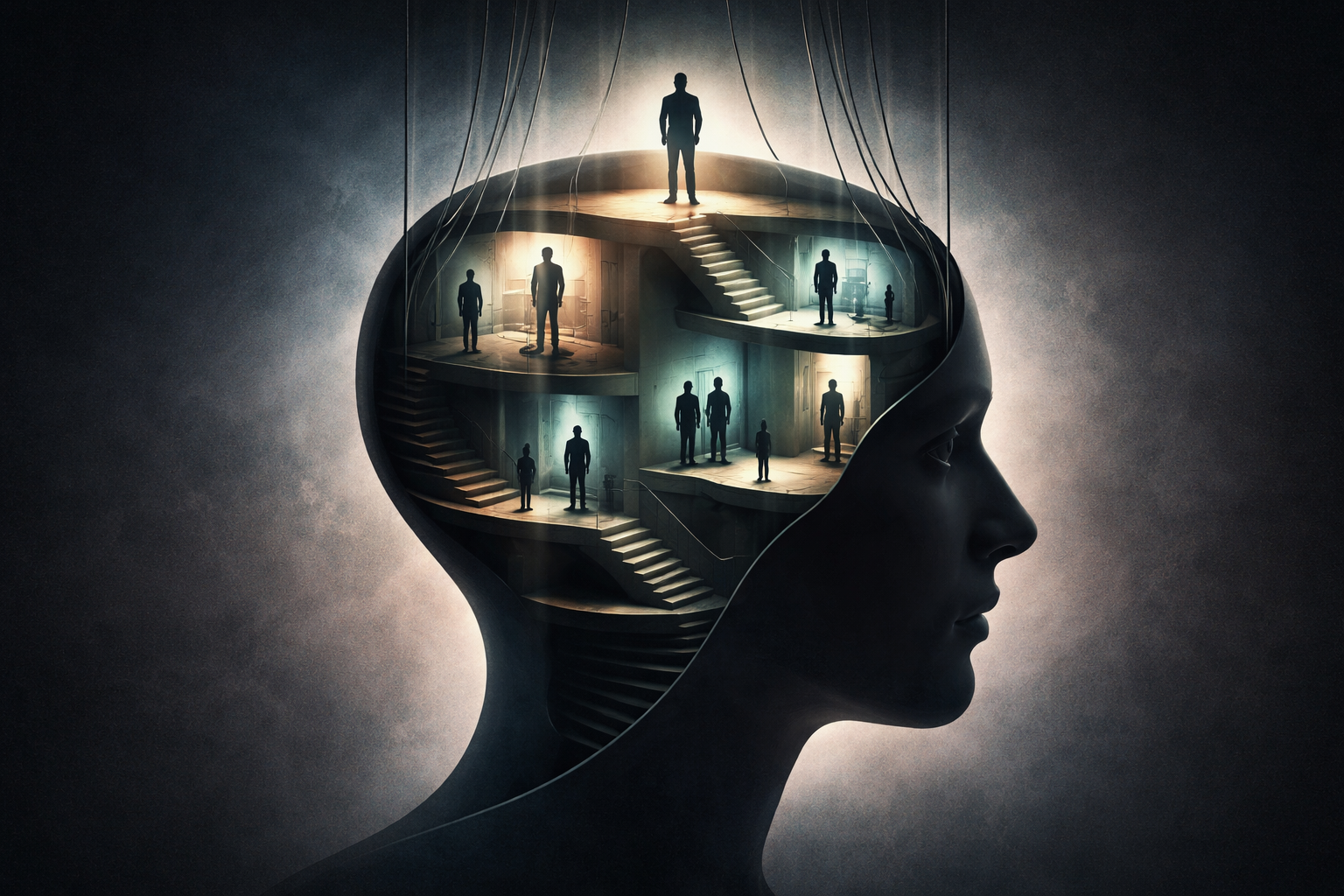
Indirect power does not operate on behavior directly. It operates on the psychological architecture that generates behavior — the cognitive systems that interpret situations, the emotional infrastructure that governs expression, the identity structures that determine what feels possible, and the meaning frameworks that render arrangements natural or inevitable.
This essay examines how indirect power is constituted and sustained across the four domains of Psychological Architecture simultaneously. The structure does not depend on any single mechanism. It recruits the interdependencies among Mind, Emotion, Identity, and Meaning to produce effects that are durable precisely because they are distributed.
Understanding indirect power at the level of structure is the precondition for understanding anything else about how it works.
Indirect Power: Violence as Social Control
Violence is often treated as the breakdown of social regulation, yet it functions as a background condition that gives indirect power its force. This essay examines how the availability of violence shapes behavior, narrows resistance, stabilizes hierarchy, and underwrites indirect mechanisms even when force is not directly used.
The Psychological Architecture of Indirect Power
Indirect power does not operate on behavior directly. It operates on the psychological architecture that generates behavior — the cognitive systems that interpret situations, the emotional infrastructure that governs expression, the identity structures that determine what feels possible, and the meaning frameworks that render arrangements natural or inevitable. This essay examines how indirect power is constituted and sustained across all four domains simultaneously.