

How do people and institutions think, feel, identify, and make meaning?
Psychology, philosophy, and the structures beneath human experience.

RJ Starr's work examines how thought, emotion, identity, and meaning interact within people, relationships, groups, institutions, and cultures. Across psychology and philosophy, the recurring question is how human life becomes coherent, what causes that coherence to fracture, and what happens when the structures people and institutions depend upon come under strain.
Psychological Architecture is the most developed expression of that inquiry, bringing Mind, Emotion, Identity, and Meaning together as interdependent domains. The work extends from there into lived experience, organizational life, culture, ethics, aging, authority, and artificial intelligence.
Here, that inquiry takes several forms: essays, research, books, and recorded talks, written for anyone interested in understanding human experience more closely.
What Keeps Us Human to One Another?
What Keeps Us Human to One Another? begins with ordinary moments between people: a stranger offers water, someone is welcomed, someone is forgiven, someone else is ignored, humiliated, or treated as though they no longer matter. Each piece stays with one moment long enough to ask what was happening between the people involved, and then tests that answer against a case that went differently. The series stands apart from the framework-based work elsewhere on this site. It applies no model and can be read entirely on its own, as one observer's inquiry into how people come to matter to one another, and how they sometimes cease to.
The Foundational Books
Two volumes anchor the work. One examines psychological life in full. The other defines the structural system that makes that examination possible. Together they form the foundation for the individual dimension of Psychological Architecture.

The Psychology of Being Human
The Psychology of Being Human: An Authoritative Guide to Mind, Emotion, and Meaning is a comprehensive examination of psychological experience across mind, emotion, behavior, relationships, meaning, trauma and psychological repair, the social context of the self, and the conditions for psychological integration. Written for serious readers who want to understand the full range of psychological life.
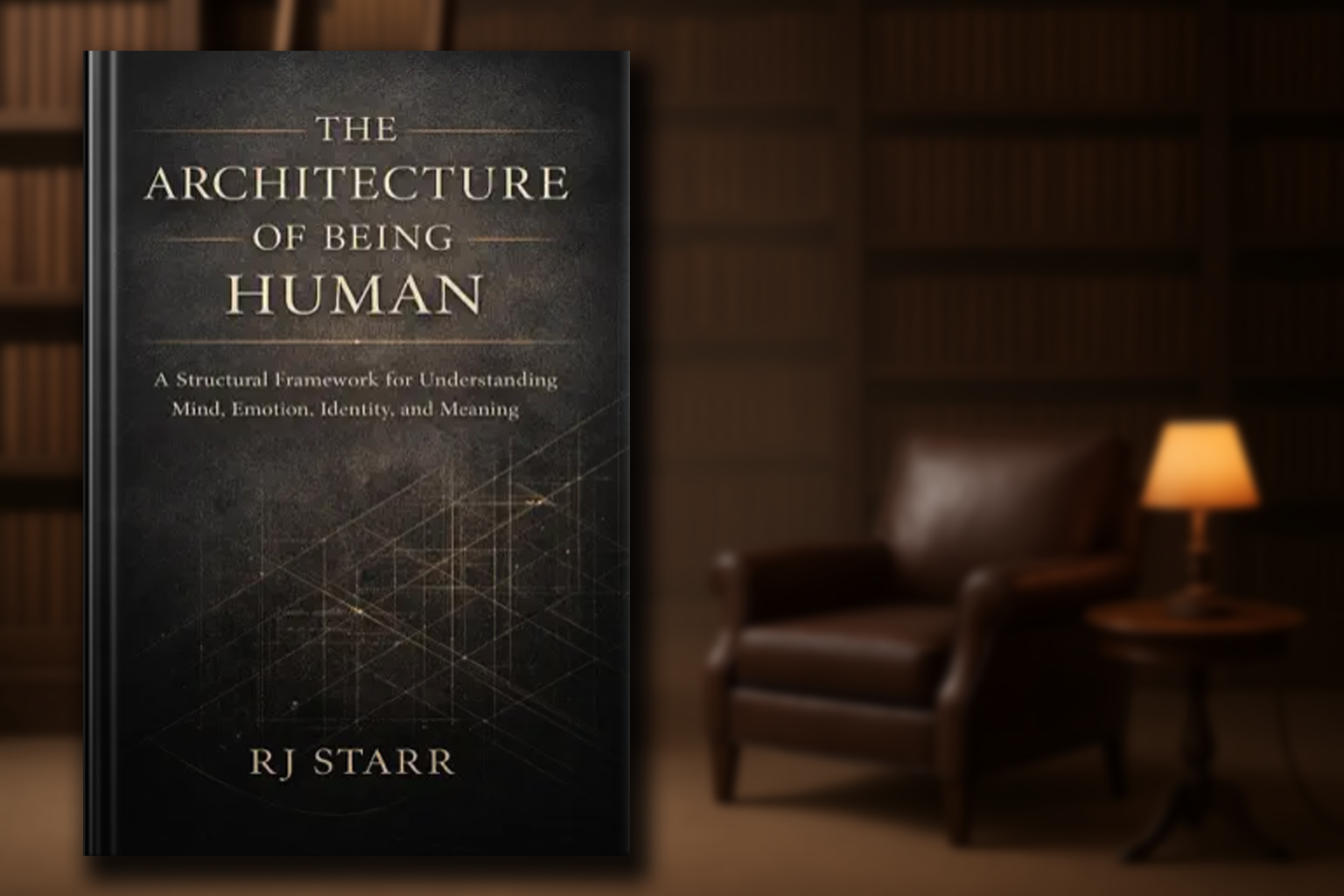
The Architecture of Being Human
A formal articulation of Psychological Architecture as a structural model of human experience. This volume presents the system in its developed form, showing how mind, emotion, identity, and meaning function as interdependent domains within a unified structure. If you want the framework itself, this is where the architecture is defined.